Showing posts with label Germany. Show all posts

Thursday, April 1, 2010

The Imam Search


There are two interesting pieces that recently came out about the struggles faced by Muslim communities in the US and Germany. The first, published in the Washington Post, tells the story of a young American-Muslim imam who is searching to find a place for himself within the Muslim community. Unlike Christian and Jewish communities who have an established employment network set up for newly minted Rabbis, Priests, Ministers, etc., according to Adeel Zeb, the story’s protagonist, there is no such network for young imams. In fact, many American-Muslim families hope their sons will grow up to be lawyers or doctors rather than men of the cloth. Moreover, the generational divide is a significant obstacle. Imams not only need to be learned, but must also look the part: older (Zeb is 28) and sport a “gray beard.”

Meanwhile, across the Atlantic, German Muslims are facing similar problems. At a recent event that addressed the question: “What Role Do Religion and Culture Play in Integration? A Transatlantic Comparison of Muslim Integration in Germany and the U.S.” hosted by the American Institute for Contemporary German Studies (AICGS) in Berlin, the discussion quickly turned to the lack of German-born imams. As Zeb noted in the Post article, “most American mosques are led by imams from overseas who aren't fluent in English. They know how to lead prayers but don't necessarily have the professional credentials or communication skills to become community leaders.” If Germans read this article, I’m sure they could relate. The lack of locally born imams is concerning to a country that still struggles with how to integrate its Muslim population. Moreover, those who do work in Germany often lack language skills, knowledge of the country in which they, and their congregation, live, and are uneducated about the cultural touchstones of their adopted countries.

While Zeb no doubt faces real frustrations, it seems as though, based on these two examples, it is the American-Muslim community that comes out ahead. In the US, at least, there is an opportunity for him to receive the type of training that for German-Muslims is still an abstraction.

The Post article ends on a wistful note offering thoughts about what professions Zeb might enter into, none of them being the one of his choice: imam. Perhaps I have one additional suggestion for him. Learn German and move to Germany. I hear they’re hiring.


Monday, March 1, 2010

Innocence Lost


A Woman in Berlin is a harrowing, sparse account of a woman's experience surviving in Soviet-occupied Berlin at the end of World War II. Its themes of rape, despair and abandonment were taboo once the war was over and the women in the book silenced. The author of A Woman in Berlin published her account anonymously in the 1950s to widespread condemnation in Germany and in 2003, it was republished--still anonymously.

Today, the subject is more easily broached, but because of the passage of time, many of those who could have spoken out have died. One woman, Gabriella Koepp, however, has come forward and recently published a book under her own name entitled, Why Did I Have to Be a Girl? In it, she details her escape, as a 15 year-old, from her German hometown in Pomerania (now Poland). Due to a railroad miscalculation, she ended up heading south into Soviet-held territory rather than north towards safety. Once there, Koepp was raped repeatedly by Soviet soldiers over a 14-day period and now, at 80, she still has not gotten over the trauma.

Because of the brutality of the Nazi era, it can be difficult to accept Germans both as perpetrators and victims during the Nazi era. Stories like Koepp's are essential because by inverting traditional narratives, they remind us how complex and messy historical truths truly are. For the full story, click here.

Tuesday, January 26, 2010

News Links Round-Up

Headlines from around the world:

Berlin is going the way of Hungary with its new park to "disgraced monuments." That's now at the top of my list of things to do in Germany.

German Holocaust survivors use hip-hop to tell their story.

A new ruling from the European Court on Human Rights forces Bosnia and Hertzagovina to change their laws about who can run for high office.

And more on difficulties facing Muslims in Germany.

Tuesday, December 22, 2009

Too Close to Home?


Ever since the ban on minarets in Switzerland was announced, I've been mulling over the similarities and differences between that and the restrictions on synagogue construction that was prevalent in pre-World War II Europe. I seem to remember, for instance, that synagogues in Germany, until the Neue Syangoge in the mid-1800s, were required to be built behind a plain facade and away from the street. Even after the Neue Synagogue was built, it was met with significant criticism (much of it anti-Semitic in tone) that has echoes in the rhetoric used about the minarets today.

So, I was very pleased to see an article in JTA by Ruth Ellen Gruber, author and journalist, that addressed this very issue. While she doesn't see exact parallels, the recent ban certainly recalls those earlier restrictions and considers it to be a true cause for concern.

"I know it's a very long way from a ban on new minarets to the much more drastic measures that led to this state of affairs. But as my brother Sam put it, "Restricting specific types of religious or cultural expression -- especially when such restrictions are deliberate exceptions to existing building, zoning, health and safety codes -- is discriminatory." It is, he said, "an act of denigration of cultural custom and, by extension, of the people who cherish, or the religion that requires, those very customs."

Thursday, December 10, 2009

Complex Justice


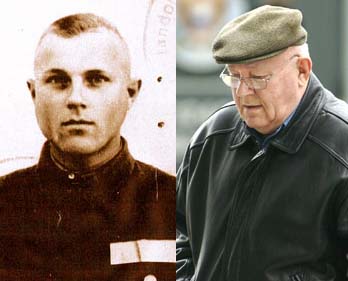
The current trials involving alleged Nazi concentration camp guards provoke some complex questions about what constitutes justice. The question is not so much should they be punished, but rather what form that punishment should take. I discuss this in greater detail a recent post for Moment Magazine.

But there are some other areas which I didn't explore: the concept, for instance, of collective guilt. If the families of these former Nazis knew about their father's/grandfather's past, and didn't do anything, should they be held accountable as well? If so, in what way? Should they also be jailed? If they didn't know, should they be pressured to take responsibility for their father's/grandfather's actions? What what form would that pressure take?

And what do these trials offer Holocaust survivors and their families today? A spokesperson for Yad Vashem suggests that it offers some modicum of justice. But again, what kind of justice? All of the accused are elderly and many in ill health. If we morally can't hold their families responsible for their actions, then there is no long-term punishment for these men. We won't be cutting them off from life or happiness prematurely. Yes, they will at long last be imprisoned, but it is only temporary. Others may argue that these trials demonstrates that Germany is exorcising its sins. But few people would argue that Germany hasn't done enough to come to terms with its past. Would these trials really mean the difference between forgiving Germany or not? Would it mean opening up the discussion about the Holocaust in the way that the Eichmann trial did in the 60s? Again, I think not.

I certainly don't have all the answers, (although I do make some suggestions) but would like to hear what some of you think.